Introduction
Electricity prices continue to rise across the world. Many homeowners now look for smarter ways to reduce monthly energy costs while protecting the environment. One of the best solutions is using solar home appliances, which convert clean sunlight into useful electricity for everyday tasks.
Today, modern solar technology is more affordable and efficient than ever before. From lighting systems to refrigerators and water heaters, many household products now work with solar energy. This guide explains everything you need to know about solar home appliances, their benefits, types, costs, maintenance and how to choose the right products for your home.
What Are Solar Home Appliances?
Solar home appliances are household devices that use electricity generated by solar panels. Some appliances run directly on solar power during the day, while others use stored energy from batteries for nighttime operation.
A complete solar system usually includes solar panels, an inverter, batteries and electrical wiring. Together, these parts provide clean and renewable energy for daily household needs.
How Solar Appliances Work
Solar panels collect sunlight and convert it into direct current (DC) electricity. The inverter changes DC into alternating current (AC), which powers most household appliances.
If your system includes batteries, extra electricity is stored for later use. This stored power helps your home stay powered during cloudy weather or at night.
Why Are Solar Home Appliances Becoming Popular?
People choose solar-powered products because they help lower electricity bills while reducing pollution. Governments in many countries also support solar energy through tax credits, rebates or incentive programs.
Some major benefits include:
| Benefit | Explanation |
|---|---|
| Lower Electricity Bills | Solar energy reduces dependence on the power grid. |
| Eco-Friendly | Produces clean energy without harmful emissions. |
| Energy Independence | Less reliance on utility companies. |
| Long-Term Savings | Lower operating costs over many years. |
| Quiet Operation | Most solar systems work silently. |
Many homeowners now see solar power as a smart long-term investment instead of an expensive upgrade.
Common Types of Solar Home Appliances
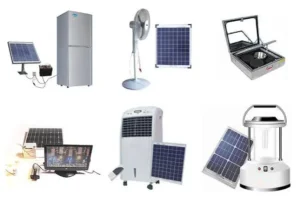
Modern technology has made almost every major household appliance available in a solar-powered version.
Solar Lights
Solar lights are among the most popular options. They automatically charge during the day and illuminate gardens, pathways, driveways and outdoor spaces at night.
They require little maintenance and often last several years before battery replacement becomes necessary.
Solar Water Heaters
Solar water heaters use sunlight instead of electricity or gas to heat water. They are highly efficient in sunny regions and can reduce water heating costs significantly.
Many families recover the installation cost through energy savings over time.
Solar Refrigerators
Solar refrigerators work well in remote locations where electricity is unreliable. They use efficient compressors that consume less energy than traditional refrigerators.
These refrigerators are also common in cabins, farms and healthcare facilities.
Solar Fans
Solar-powered fans provide cooling without increasing electricity bills. They are excellent for patios, greenhouses, garages and outdoor workspaces.
Some portable models include rechargeable batteries for nighttime use.
Solar Air Conditioners
Modern solar air conditioners combine energy efficiency with renewable power. They reduce cooling expenses during hot summer months when sunlight is strongest.
Although installation costs remain higher, long-term savings often justify the investment.
Solar Security Cameras
Solar-powered security cameras operate using rechargeable batteries charged by small solar panels. They continue working during power outages.
This feature makes them ideal for home security and remote property monitoring.
Most Energy-Efficient Solar Appliances
Not every appliance uses the same amount of electricity. Choosing energy-efficient products allows your solar system to power more devices.
| Appliance | Average Energy Usage | Solar Compatibility |
|---|---|---|
| LED Lights | Very Low | Excellent |
| Ceiling Fan | Low | Excellent |
| Laptop | Low | Excellent |
| Television | Medium | Good |
| Refrigerator | Medium | Very Good |
| Washing Machine | Medium | Good |
| Water Heater | High | Excellent |
| Air Conditioner | High | Good with larger systems |
Selecting energy-efficient models reduces the required size of your solar installation.
How Much Money Can Solar Appliances Save?
Savings depend on electricity rates, sunlight availability and household energy consumption.
A family using several solar-powered appliances may reduce electricity bills by 30% to 80% over time. Homes with complete rooftop solar systems often experience even greater savings.
Although installation costs can seem high, most systems operate for 25 years or more with proper maintenance.
Choosing the Right Solar Home Appliances
Before purchasing any solar-powered product, evaluate your home’s energy needs.
Consider these important factors:
- Available roof space
- Average daily sunlight
- Appliance energy consumption
- Battery backup requirements
- Product warranty
- Brand reputation
- Installation quality
Buying quality equipment usually provides better efficiency and fewer repairs.
Solar Panels and Appliance Compatibility
Solar panels come in different sizes and power ratings. Larger homes generally require higher-capacity systems.
| Solar System Size | Suitable For |
|---|---|
| 1–2 kW | Small apartments |
| 3–5 kW | Average family homes |
| 6–8 kW | Large homes |
| 10+ kW | Luxury homes with heavy appliance use |
A professional installer can calculate the correct system size based on daily electricity usage.
Are Solar Appliances Worth the Investment?
For many homeowners, the answer is yes.
The initial investment may seem expensive, but electricity savings continue for decades. As utility prices increase, solar-powered homes become even more valuable.
Property values may also increase because buyers appreciate lower operating costs.
Maintenance Requirements
One major advantage of solar technology is its low maintenance.
Solar panels usually require occasional cleaning to remove dust, leaves, or bird droppings. Batteries may need replacement after several years depending on usage.
Professional inspections every few years help maintain peak system performance.
Common Myths About Solar Appliances
Many people still believe outdated information about solar energy.
Myth: Solar appliances only work in hot climates.
Fact: Solar panels generate electricity even during cold weather. They simply need sunlight.
Myth: Solar systems require constant maintenance.
Fact: Most systems need very little maintenance throughout their lifespan.
Myth: Solar appliances stop working on cloudy days.
Fact: Solar panels still generate electricity under cloudy skies, although output decreases.
Solar Appliances for Different Rooms
Every room in a house can benefit from solar-powered technology.
Kitchen
Solar refrigerators, lighting, water heaters and ventilation systems reduce electricity usage.
Living Room
LED lighting, televisions, Wi-Fi routers and charging stations operate efficiently using solar energy.
Bedroom
Solar fans, lighting, phone chargers and smart home devices improve comfort while saving energy.
Bathroom
Solar water heaters provide hot water without increasing monthly utility costs.
Outdoor Areas
Solar garden lights, security cameras, fountains and motion sensors improve safety and convenience.
Environmental Benefits
Solar energy produces electricity without burning fossil fuels. This process reduces greenhouse gas emissions and improves air quality.
Every solar installation contributes to cleaner communities and helps conserve natural resources.
Many experts consider residential solar adoption one of the simplest ways to reduce carbon footprints.
Challenges of Solar Home Appliances
Although solar technology offers many advantages, buyers should understand its limitations.
Initial installation costs remain the biggest challenge. Battery storage systems also increase total project expenses.
Weather conditions affect electricity production. Homes in shaded locations may require larger systems.
Despite these challenges, improvements in solar technology continue making systems more affordable every year.
Tips to Maximize Solar Efficiency
Proper planning increases the value of your investment.
Install panels where they receive maximum sunlight throughout the day. Keep panels clean and avoid shading from nearby trees.
Choose ENERGY STAR-rated appliances whenever possible. Efficient appliances require less electricity and improve overall system performance.
Monitoring energy usage also helps identify opportunities to reduce waste.
Future of Solar Home Appliances
Solar technology continues improving rapidly.
Manufacturers now produce smarter appliances that automatically optimize energy usage. Artificial intelligence and smart home integration make solar systems even more efficient.
Battery technology also continues advancing. New batteries store more electricity while lasting longer than previous generations.
As production increases worldwide, prices are expected to continue falling, making solar energy available to even more homeowners.
Conclusion
Investing in solar home appliances is one of the smartest decisions homeowners can make today. These appliances reduce electricity bills, support environmental protection and provide reliable energy for daily living.
As technology advances, solar-powered homes become more practical and affordable every year. Whether you begin with simple outdoor lights or install a complete rooftop solar system, every step toward renewable energy creates long-term financial and environmental benefits.
Choosing quality equipment, planning the right system size and maintaining your installation properly will help you enjoy clean energy for decades.
Frequently Asked Question
1. What are solar home appliances?
Solar home appliances are household devices that operate using electricity produced by solar panels instead of relying completely on the electrical grid.
2. Do solar appliances work at night?
Yes. Systems with battery storage provide electricity after sunset by using energy stored during the day.
3. Can solar appliances reduce electricity bills?
Yes. Many homeowners reduce electricity costs by 30% to 80%, depending on system size and energy usage.
4. How long do solar panels last?
Most quality solar panels last 25 to 30 years while maintaining good efficiency.
5. Are solar home appliances expensive?
The initial cost is higher than traditional appliances, but long-term savings usually offset the investment.
6. Which solar appliance should I buy first?
Many homeowners begin with solar lights, solar water heaters or solar fans because they provide quick savings and simple installation.