
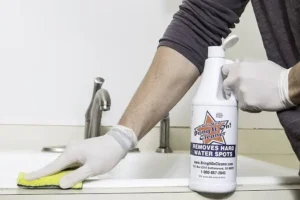
Hard water can make bathroom cleaning frustrating because minerals can leave white spots, cloudy marks and stubborn deposits. When those minerals react with soap, they can also create soap scum, a sticky film that clings to showers, tubs, sinks and glass doors.
Choosing the right hard water and soap scum remover can make regular bathroom cleaning much easier. The best approach depends on the type of buildup, the surface you need to clean and whether you prefer a commercial cleaner or a simple household solution.
What Is Hard Water?
Hard water contains dissolved minerals, mainly calcium and magnesium. These minerals are harmless in normal household water, but they can create visible deposits when water dries on bathroom surfaces.
You may notice hard water stains around faucets, showerheads, sinks, bathtubs and glass shower doors. Over time, repeated exposure can create a cloudy or chalky layer that becomes harder to remove.
Hard water can also affect how soap behaves. According to the U.S. Geological Survey, minerals in hard water can react with soap and form the residue commonly known as soap scum.
What Is Soap Scum?
Soap scum is a residue that develops when soap ingredients interact with minerals in hard water. Instead of washing completely away, the mixture can remain on bathroom surfaces and form a dull, sticky or chalky film.
Soap scum often appears on shower walls, bathtub surfaces, faucets, tiles and glass doors. Body oils, shampoo, conditioner and other bathroom products can make the buildup even more noticeable.
The longer soap scum stays on a surface, the more difficult it can become to remove. Regular cleaning therefore works better than waiting until thick buildup covers the entire bathroom.
Hard Water Stains vs. Soap Scum
Although hard water stains and soap scum often appear together, they are not exactly the same. Hard water stains mainly come from mineral deposits, while soap scum develops when soap interacts with minerals and leaves a residue.
Knowing the difference helps you choose a suitable cleaner. Mineral deposits generally respond well to acidic cleaning products, while soap-based residue may require a cleaner that can break down the organic film.
| Buildup | Main Cause & Appearance | Cleaning Approach |
|---|---|---|
| Hard Water Stains | Calcium and magnesium deposits; white, cloudy, or chalky marks | Use a mineral-dissolving cleaner |
| Soap Scum | Soap and hard-water minerals; dull, sticky, or gray film | Use a soap-scum cleaner |
| Mixed Buildup | Minerals, soap, oils, and dirt; thick cloudy coating | Use a surface-appropriate bathroom cleaner |
| Water Spots | Dried mineral-rich water; small white spots | Wipe regularly and use a mineral cleaner |
How Does a Hard Water and Soap Scum Remover Work?
A hard water and soap scum remover works by loosening or dissolving the materials attached to the surface. Different formulas use different cleaning ingredients, so the exact method depends on the product.
Acid-based cleaners are often useful for mineral deposits because acids can react with calcium and other mineral buildup. Commercial bathroom cleaners may also be designed specifically to target hard water deposits, calcium, lime and soap scum.
Some bathroom cleaners use foaming formulas that cling to vertical surfaces. This allows the cleaner to remain in contact with the buildup instead of immediately running down the shower wall. EPA-listed bathroom cleaner labels include products designed to remove soap scum and hard-water stains from various hard, non-porous bathroom surfaces.
Where Can You Use a Hard Water and Soap Scum Remover?
The right cleaner can be useful throughout the bathroom, but you should always check the product label before applying it. Different materials can react differently to cleaning ingredients.
Common bathroom surfaces include ceramic tile, glazed porcelain, fiberglass, glass shower doors, stainless steel and chrome fixtures. Some commercial formulas are specifically labeled for several of these surfaces.
Natural stone requires extra care. Materials such as marble and some other stone surfaces can be damaged or etched by acidic cleaners, so you should use a cleaner specifically approved for that material.
Best Ingredients for Removing Hard Water Buildup
Several cleaning ingredients can help with bathroom buildup, but their usefulness depends on the type of stain and the surface.
White vinegar contains acetic acid, which can help dissolve certain mineral deposits. It can be useful on appropriate surfaces, but you should avoid acidic cleaners on sensitive natural stone because they may damage the finish.
Baking soda provides mild abrasion and can help lift surface grime when used gently. It is commonly used as a paste for bathroom cleaning, although you should still check the surface manufacturer’s care instructions before scrubbing.
Commercial cleaners can provide another option when buildup is heavy. Some products are specifically formulated to target calcium, lime, hard water deposits and soap scum in bathrooms.
How to Remove Hard Water and Soap Scum
Before cleaning, remove loose items from the shower or bathtub and rinse away loose dirt. Then choose a cleaner that is suitable for the exact surface you are cleaning.
Apply the cleaner according to its label and give it enough contact time to loosen the buildup. Avoid immediately scrubbing every stain because allowing an appropriate cleaner to work can reduce the effort needed.
Use a non-scratch sponge or suitable microfiber cloth on surfaces that could scratch easily. After cleaning, rinse the surface thoroughly and dry it with a clean cloth to reduce leftover residue and water spots.
For thick buildup, you may need to repeat the process rather than applying excessive force. Repeated gentle cleaning is usually better than aggressive scrubbing that could damage a finish.
How to Choose the Right Cleaner
Choosing a hard water and soap scum remover starts with identifying both the buildup and the surface. A cleaner that works well on ceramic tile may not be appropriate for marble, brass, or another sensitive material.
Read the product label carefully and look for the surfaces listed by the manufacturer. Some commercial bathroom cleaners are labeled for hard, non-porous materials such as glass, ceramic tile, porcelain, fiberglass and stainless steel.
You should also consider how severe the buildup is. A mild cleaner may work well for weekly maintenance, while stubborn mineral deposits may require a product specifically formulated for calcium, lime and hard water buildup.
| Cleaning Need | Suitable Approach |
|---|---|
| Light water spots | Regular bathroom cleaner and drying |
| Fresh soap residue | Mild surface-safe cleaner |
| Heavy soap scum | Dedicated soap-scum cleaner |
| Mineral deposits | Mineral or hard-water cleaner |
| Glass shower buildup | Glass-safe mineral and soap-scum cleaner |
| Natural stone | Stone-approved cleaner |
Can Vinegar Remove Hard Water and Soap Scum?
Vinegar can help with some mineral deposits because its acidity can dissolve certain types of buildup. However, it is not suitable for every bathroom surface.
Natural stone is a major example where caution matters. Cleaning guidance warns that vinegar can etch materials such as marble and can affect certain stone finishes.
You should also avoid assuming that a homemade mixture is automatically safe. Always check the material and test an appropriate cleaner in a small, hidden area when the manufacturer recommends testing.
How to Prevent Soap Scum and Hard Water Buildup
Preventing buildup is easier than removing thick deposits later. One simple habit is to remove excess water from shower surfaces after use.
The USGS notes that rinsing shower walls after bathing can help prevent soap scum buildup. Regular cleaning also prevents residue from remaining on the surface long enough to become difficult to remove.
A shower squeegee or microfiber cloth can help reduce water remaining on glass and smooth surfaces. You can also clean your bathroom regularly instead of allowing several weeks of residue to accumulate.
If hard water is a constant problem throughout your home, addressing the water itself may also help. A properly selected water-softening system can reduce the minerals responsible for many hard-water deposits.
Common Mistakes to Avoid
One common mistake is using the strongest cleaner available without checking the surface. More powerful does not always mean better, especially when the material has a delicate finish.
Another mistake is using too much force. Heavy scrubbing can scratch certain finishes, while the correct cleaner and enough contact time may loosen the buildup with much less effort.
Never mix cleaning products unless the manufacturer specifically states that they can be combined. In particular, avoid experimenting with combinations of different bathroom chemicals because unexpected chemical reactions can create dangerous fumes.
It is also important to follow ventilation and label instructions when using commercial cleaners. The product label provides information about suitable surfaces, application, contact time, rinsing and other safety requirements.
Commercial Cleaner or Homemade Solution?
Both options can have a place in bathroom cleaning. A simple household solution may be convenient for light buildup on suitable surfaces, while a commercial product can be useful when you need a formula specifically designed for hard water and soap scum.
Commercial products can also provide clearer surface instructions. For example, some bathroom cleaners are formulated to target calcium, lime, hard-water deposits and soap scum while being labeled for specific bathroom materials.
The best choice depends on your bathroom surfaces and the severity of the buildup. Always prioritize surface compatibility over cleaning strength.
How Often Should You Clean Hard Water and Soap Scum?
There is no single schedule that works for every bathroom. A frequently used shower may need more regular cleaning than a guest bathroom.
Light maintenance after showers can help reduce buildup between deeper cleanings. Weekly bathroom cleaning is a practical routine for many households, while bathrooms with heavy use may require more frequent attention. Recent cleaning guidance also recommends regular cleaning to prevent bathroom grime from becoming difficult to manage.
The goal is to prevent mineral deposits and soap residue from forming a thick layer. Small amounts of buildup are generally easier to remove than old, hardened deposits.
Why Drying Your Bathroom Matters
Water left on bathroom surfaces eventually evaporates and can leave minerals behind. If the water contains calcium and magnesium, repeated drying can gradually create visible deposits.
Drying the surface after cleaning or showering can therefore reduce the amount of residue that remains behind. This simple habit can make future cleaning faster and easier.
For glass shower doors, a squeegee can remove much of the remaining water before it dries. For faucets and sinks, a microfiber cloth can help remove water droplets without requiring aggressive scrubbing.
Conclusion
Hard water and soap scum can make an otherwise clean bathroom look dull and dirty. Understanding the difference between mineral deposits and soap residue helps you choose a better cleaning method and avoid damaging sensitive surfaces.
A reliable hard water and soap scum remover should match the surface and the type of buildup you want to remove. Regular cleaning, proper rinsing and drying can also reduce future deposits and make bathroom maintenance much easier.
Frequently Asked Questions
What is the best hard water and soap scum remover?
The best hard water and soap scum remover depends on the surface and the type of buildup. Choose a product that specifically lists your surface and targets the deposits you need to remove.
Does vinegar remove hard water stains?
Vinegar can help dissolve some mineral deposits because it contains acetic acid. However, do not use vinegar on acid-sensitive natural stone, such as marble, because it can damage the surface.
Can baking soda remove soap scum?
Baking soda can help lift bathroom grime because it provides mild abrasion. Use it gently and confirm that it is appropriate for the surface before scrubbing.
Why does soap scum keep coming back?
Soap scum returns when soap residue and hard-water minerals repeatedly contact the same surfaces. Regular cleaning, rinsing and drying can help reduce the buildup.
Can I use a hard water cleaner on marble?
You should not assume that a hard-water cleaner is safe for marble. Check the label carefully and choose a product specifically approved for natural stone, because acidic cleaners can damage marble.
How can I prevent hard water stains?
Regularly wipe or squeegee wet surfaces so mineral-rich water does not dry on them. Consistent cleaning can also stop small deposits from developing into thick buildup.


