
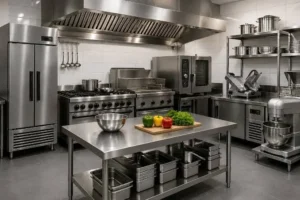
Commercial kitchens need the right tools to prepare food quickly, safely and consistently. The right commercial kitchen gadgets can help restaurants, cafés, bakeries, catering businesses and food trucks handle daily work with less effort.
Unlike basic home tools, professional kitchen equipment must handle repeated use and larger workloads. Buyers also need to consider food safety, cleaning, energy use, available space and the type of food they prepare.
What Are Commercial Kitchen Gadgets?
Commercial kitchen gadgets are practical tools and appliances designed to support food preparation, cooking, storage, cleaning and serving in a professional kitchen. They range from small preparation tools to powered machines used during busy service periods.
Some tools save preparation time, while others improve consistency and reduce manual work. A well-planned kitchen uses different tools together so staff can move smoothly from preparation to cooking and cleaning.
Why Do Commercial Kitchens Need the Right Equipment?
A busy kitchen can lose time when workers use unsuitable tools. The right equipment can make common tasks easier and help staff maintain a steady workflow during peak hours.
Good equipment can also support consistent food quality. When cooks use reliable tools, they can repeat preparation steps more accurately across different shifts.
Food safety also matters when choosing kitchen equipment. The FDA recognizes several American National Standards for commercial food equipment, including standards covering cooking, refrigeration, warewashing and powered food preparation equipment.
Essential Types of Commercial Kitchen Gadgets
Food Preparation Gadgets
Preparation tools help workers wash, cut, mix, slice, peel and portion ingredients. Common examples include food processors, mixers, slicers, vegetable cutters, scales and immersion blenders.
These tools become especially useful when a business prepares large quantities of ingredients every day. Choosing the right size and capacity can prevent staff from repeating the same task in small batches.
Cooking Gadgets
Cooking equipment supports tasks such as frying, grilling, baking, steaming, boiling and roasting. Common choices include commercial ranges, ovens, griddles, fryers, steamers and induction cookers.
The best option depends on the menu and cooking volume. For example, a bakery may need more baking capacity, while a burger restaurant may depend heavily on griddles and fryers.
Refrigeration and Storage Gadgets
Refrigeration equipment helps businesses keep ingredients at suitable temperatures during storage. Common options include reach-in refrigerators, freezers, under-counter units, prep tables and ice machines.
Storage equipment should match the amount of food a business handles. Poor planning can create crowded shelves, difficult access and unnecessary food waste.
Cleaning and Dishwashing Equipment
Commercial kitchens also need reliable equipment for cleaning dishes, utensils, cookware and food-contact surfaces. Dishwashers, pre-rinse spray valves, sinks and related tools can reduce the time required for cleanup.
The U.S. Department of Energy recommends sizing commercial dishwashers according to expected demand. These machines can be major energy users in commercial kitchens.
Small Gadgets That Can Improve Kitchen Workflow
Not every useful tool needs to be a large machine. Small equipment such as digital scales, timers, thermometers, measuring tools, squeeze bottles, storage containers and handheld mixers can improve daily workflow.
Digital tools can also help staff measure ingredients consistently. This matters when a restaurant wants the same portion size and recipe results across different shifts.
How to Choose Commercial Kitchen Gadgets
Start With the Menu
The menu should guide equipment choices. A kitchen that mainly serves baked foods will need different tools from a restaurant that focuses on grilled meals.
List the main preparation and cooking tasks before buying equipment. This approach helps prevent businesses from spending money on tools that rarely get used.
Consider Kitchen Space
Measure the available area before purchasing large equipment. Leave enough room for workers to move, clean, open doors and access storage.
A compact kitchen may benefit from multi-purpose equipment. Combining several functions into fewer machines can help preserve valuable workspace.
Check Capacity and Workload
Equipment should match the expected workload rather than simply looking powerful or large. A machine that is too small can slow production.
An oversized model may also waste space, energy and money. The Department of Energy recommends selecting equipment according to projected use and operating needs.
Look at Cleaning Requirements
Easy cleaning is an important feature for professional food equipment. Machines with difficult-to-reach areas can take longer to clean.
The FDA notes that commercial food equipment standards address sanitary design. Its slicer guidance also emphasizes cleaning, maintenance and repair of worn parts.
Compare Energy and Water Use
Energy and water costs can become significant over the life of kitchen equipment. Efficient models may reduce operating costs while supporting responsible resource use.
The Department of Energy highlights commercial ice makers, dishwashers, steam cookers and pre-rinse spray valves as areas where water efficiency matters.
Key Features to Check Before Buying
| Feature | Why It Matters |
|---|---|
| Capacity | Helps match equipment to daily production needs |
| Material | Supports durability and easier cleaning |
| Size | Ensures the equipment fits the available space |
| Energy use | Can affect long-term operating costs |
| Water use | Matters for dishwashing and cleaning equipment |
| Safety design | Helps support safer kitchen operation |
| Maintenance | Makes repairs and routine care easier |
| Warranty | Provides information about manufacturer coverage |
| Certification | Can help confirm recognized sanitation or safety standards |
Commercial Kitchen Equipment for Different Businesses
Restaurants often need a balanced combination of preparation, cooking, refrigeration and cleaning equipment. The exact mix depends on the menu, customer volume, kitchen layout and service style.
Cafés may focus more on coffee preparation, refrigeration, blending, baking and quick food preparation. Bakeries often need mixers, ovens, proofing equipment, racks, scales and storage solutions.
Catering businesses need equipment that supports preparation in larger batches. They may also need portable or easy-to-transport tools.
Food trucks usually need compact equipment that provides multiple functions. This approach helps save space inside a limited working area.
Energy Efficiency in a Commercial Kitchen
Energy efficiency should be considered before purchasing new equipment. Efficient machines can help control operating costs and may reduce water and energy waste.
The Department of Energy explains that commercial kitchen operations can account for a meaningful share of energy use in food-service facilities. It recommends efficient appliances such as refrigerators, freezers, dishwashers, ice machines, fryers, holding cabinets and steamers.
For some equipment categories, efficiency standards provide a useful comparison point. The Department of Energy provides purchasing guidance for commercial griddles and notes that efficient models can reduce lifetime operating costs.
Food Safety and Equipment Selection
Food safety should remain a major part of equipment planning. Equipment that touches food should support safe handling through proper design, installation, cleaning and maintenance.
The FDA’s current Food Code provides a model for food safety regulation in restaurants and other food-service settings. Local authorities may adopt or modify these provisions, so businesses should check the rules that apply in their location.
Businesses should also inspect equipment regularly. Damaged seals, cracks, worn parts, leaks or difficult-to-clean surfaces can create problems.
Maintenance Tips for Commercial Kitchen Gadgets
Regular maintenance can extend equipment life and keep kitchen operations running smoothly. Staff should follow manufacturer instructions for cleaning, inspection, lubrication, descaling and other routine care.
The Department of Energy recommends removing scale, cleaning coils, repairing leaks and operating equipment according to manufacturer guidance.
Create a simple maintenance schedule for daily, weekly and periodic tasks. Record repairs and inspections so managers can identify repeated problems before they cause major downtime.
Common Buying Mistakes to Avoid
One common mistake is buying equipment based only on the lowest purchase price. A cheaper machine may cost more over time if it uses more energy or needs frequent repairs.
Another mistake is ignoring the kitchen layout. Large equipment can block walkways or make cleaning difficult when managers do not measure the space before installation.
Buying too many gadgets can also create clutter. Focus on equipment that supports the menu and solves a real workflow problem.
A Simple Commercial Kitchen Equipment Planning Approach
Before making a purchase, write down the kitchen’s daily tasks and expected food volume. Then identify which tasks take the most time and which ones cause repeated manual work.
Next, compare equipment based on capacity, space, cleaning, energy use, maintenance and safety. This method can help businesses make practical choices instead of buying equipment simply because it looks advanced.
| Kitchen Need | Useful Equipment Type | Main Goal |
|---|---|---|
| Ingredient preparation | Processor, mixer, slicer | Faster preparation |
| Cooking | Oven, griddle, fryer, steamer | Consistent cooking |
| Cold storage | Refrigerator, freezer, prep table | Safe ingredient storage |
| Cleaning | Dishwasher, sink, spray valve | Faster sanitation |
| Portion control | Scale, measuring tools | Consistent servings |
| Food holding | Holding cabinet, warming equipment | Maintain service readiness |
Future Trends in Commercial Kitchen Equipment
Modern food-service businesses are also exploring connected and smarter equipment. Digital controls, temperature monitoring, automated alerts and energy tracking can help managers monitor kitchen operations.
The FDA has identified smart kitchen equipment that can automatically monitor time and temperature processes as one area of interest in modern food safety approaches.
However, technology should solve a real business problem. A smart feature is useful when it saves time, improves monitoring, reduces waste or supports consistent operation.
Conclusion
Choosing the right equipment is about more than filling a kitchen with machines. Businesses should match each tool to their menu, workload, space, cleaning needs, energy use and food safety requirements.
A practical buying process can reduce unnecessary spending and improve daily workflow. With proper planning, maintenance and staff training, commercial kitchens can create an organized environment for consistent food preparation.
Frequently Asked Question
What are the most important gadgets for a commercial kitchen?
The most important equipment depends on the menu and workload. Most professional kitchens need tools for preparation, cooking, refrigeration, storage, cleaning and food holding.
How do I choose the right kitchen equipment size?
Estimate daily production and peak service demand before buying. Choose equipment that can handle expected workloads without taking too much space.
Why is energy efficiency important in commercial kitchens?
Commercial kitchens can use significant amounts of energy and water. Efficient equipment can help reduce operating costs and support better resource management.
Is food equipment certification important?
Certification can help show that equipment meets recognized standards for sanitation or food-service use. Businesses should also check local requirements before installation.
How often should commercial kitchen equipment be maintained?
Maintenance frequency depends on the equipment and manufacturer instructions. Daily cleaning, routine inspections and scheduled servicing can help prevent avoidable problems.
What should I consider besides the purchase price?
Consider capacity, energy use, water use, cleaning needs, maintenance, warranty, available space and expected service life. These factors affect the total cost of ownership.


