
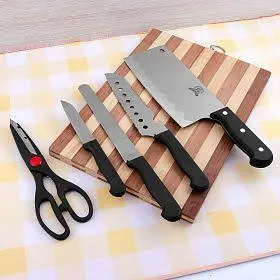
Every great meal starts on the cutting board. A sharp, well-chosen tool makes prep faster and much safer.
This guide explains the 5 cutting tools in kitchen drawers that deserve a place in every home. You will learn what each tool does, when to use it and how to care for it.
You do not need a giant knife block full of gadgets. A few smart tools can handle almost every recipe you will ever cook.
Why the Right Cutting Tools Matter
Many people think a dull knife is safer than a sharp one. That idea is wrong. A dull blade slips more often and causes more cuts.
Good tools also save time. A sharp knife glides through an onion in seconds, while a weak one crushes it.
Better cuts help food cook evenly too. When every carrot piece has the same size, all the pieces finish at the same time.
The 5 Cutting Tools in Kitchen at a Glance
The table below shows each tool, its best use and a rough price range. Use it as a quick shopping guide.
| Tool | Best For | Typical Size | Rough Price (USD) |
|---|---|---|---|
| Chef’s knife | Chopping, slicing, dicing | 8 inches | $30–$150 |
| Paring knife | Peeling, trimming, small jobs | 3–4 inches | $8–$40 |
| Serrated knife | Bread, tomatoes, cakes | 8–10 inches | $20–$80 |
| Kitchen shears | Herbs, poultry, packaging | 8 inches | $10–$40 |
| Vegetable peeler | Removing skins from produce | Handheld | $5–$20 |
1. Chef’s Knife – The Star of Every Kitchen
The chef’s knife is the hardest-working tool in any kitchen. Most blades measure 8 inches, which fits most hands and cutting boards. You will use it to chop onions, slice meat and dice herbs.
The wide blade lets you rock the knife back and forth for fast cuts. Your knuckles also have room to guide the blade safely. Practice the rocking motion slowly at first.
Two main styles exist. German-style knives feel heavier and have a curved belly. Japanese-style knives feel lighter and have a thinner edge.
Hold a few knives in a store before you buy one. The best knife is the one that feels balanced in your hand. A good chef’s knife can last for decades with proper care.
2. Paring Knife – Small Blade, Big Control
The paring knife is the small hero of the kitchen. Its blade measures about 3 to 4 inches. It works best when you hold food in your hand.
Use it to peel apples, trim green beans and remove strawberry tops. It also helps you devein shrimp and cut out bad spots on fruit. Nothing else handles detail work this well.
Choose a paring knife with a sharp tip and a comfortable handle. Cheap ones work fine because you can replace them easily. Many cooks keep two or three on hand.
Always cut away from your body when you use this knife. Keep your thumb out of the blade’s path. Small knives can cause surprising injuries when you rush.
3. Serrated Knife – The Bread and Tomato Expert
A serrated knife has a blade with tiny teeth, like a saw. These teeth grip tough crusts and slippery skins. A smooth knife often squashes soft bread, but this one slices cleanly.
Most home cooks think of it as a bread knife. It does much more than that. It also slices ripe tomatoes, cakes, citrus fruit and even pineapple.
Use a gentle sawing motion and let the teeth do the work. Pressing down hard will crush your food. A light touch gives you neat, even slices.
Serrated knives stay sharp for a long time because the teeth take the wear. You can still sharpen them, but you need a special rod. Many people simply replace the knife every few years.
4. Kitchen Shears – The Most Underrated Tool
Kitchen shears look like scissors, but they are built for food. Strong blades cut through chicken skin, bones and tough packaging. Many models come apart so you can wash them well.
You can snip fresh herbs straight into a pot. You can also trim pizza, cut bacon and open stubborn food bags. Shears often work faster than a knife for these jobs.
Pick shears with comfortable handles and a firm pivot. Look for blades made from stainless steel. Avoid cheap pairs that bend or wobble when you cut.
Never use your food shears for crafts or paper. Paper dulls the blades quickly. Keep one pair just for cooking.
5. Vegetable Peeler – A Simple Tool That Saves Time
The vegetable peeler may seem basic, but it earns its place. It removes skins from potatoes, carrots and apples in seconds. It also gives you thin, even strips.
Two common styles exist. A swivel peeler has a straight blade that moves with the curve of your food. A Y-peeler has a wide blade that works well on large vegetables.
You can use a peeler for more than skins. Make chocolate curls, cheese shavings, or long zucchini ribbons. These little tricks add flair to simple dishes.
Replace your peeler when it starts to drag or tear the skin. Peelers cost very little, so a fresh one is easy to buy. A sharp peeler is also much safer than a dull one.
How to Keep Your Cutting Tools Sharp and Clean
Sharp tools work better and last longer. A few simple habits protect your investment. These habits matter for all of the 5 cutting tools in kitchen setups we covered here.
Use a honing steel often to straighten the edge of your blade. Honing does not remove metal, so it is safe to do weekly. Sharpen your knives with a whetstone or a pull-through sharpener once or twice a year.
Wash knives by hand with warm water and mild soap. Dry them right away to prevent rust. Never put good knives in the dishwasher, because heat and harsh soap damage the edge.
| Tool | How to Maintain | Best Storage |
|---|---|---|
| Chef’s knife | Hone weekly, sharpen twice a year | Knife block or magnetic strip |
| Paring knife | Hone often, replace when worn | Blade guard in a drawer |
| Serrated knife | Use a special rod or replace | Knife block |
| Kitchen shears | Wipe clean, oil the pivot | Drawer or hook |
| Vegetable peeler | Replace when dull | Utensil drawer |
Simple Safety Rules for Every Cook
Safety starts with a steady cutting board. Place a damp paper towel or a rubber mat under it so it cannot slide. A wobbly board is a common cause of accidents.
Use the claw grip to guard your fingers. Curl your fingertips inward and rest the knife against your knuckles. This habit keeps your fingertips out of danger.
Never try to catch a falling knife. Step back and let it drop. A dropped knife is annoying, but a cut hand is a much bigger problem.
Store knives where little hands cannot reach them. Do not leave them in a sink full of soapy water. Someone might reach in and grab a blade by mistake.
How to Choose the Right Tools for Your Budget
You do not need to spend a fortune. Start with a good chef’s knife, then add the other tools over time. A single great knife beats a cheap set of twenty.
Look at the steel, the handle and the balance. Stainless steel resists rust, while high-carbon steel holds a sharper edge. Choose a handle that feels firm and does not slip when wet.
When you shop for the 5 cutting tools in kitchen sets, compare single pieces instead of buying a big block. Many brands sell individual knives at fair prices. This way, you pay only for the tools you will actually use.
Read reviews from real home cooks before you buy. Check the return policy as well. A comfortable tool is worth more than a famous brand name.
Common Mistakes to Avoid
Many cooks use the wrong tool for the job. They try to cut bread with a chef’s knife or peel potatoes with a big blade. Matching the tool to the task saves time and effort.
Another mistake is using a glass or stone cutting surface. These hard boards dull a blade within days. Choose wood or plastic boards instead, since they are gentler on the edge.
Some people also forget to clean their tools after cutting raw meat. Bacteria can spread to other foods. Wash every blade and board with hot, soapy water right away.
Conclusion
Great cooking does not need fancy gear. It needs a few reliable tools that you keep sharp and use with care. The 5 cutting tools in kitchen lists we covered here give you everything you need to start.
Begin with a chef’s knife, then add a paring knife, a serrated knife, shears and a peeler. Practice your skills, protect your fingers and enjoy faster prep. Your meals will taste better and your kitchen time will feel easier.
Frequently Asked Questions (FAQs)
What are the 5 cutting tools in kitchen that every beginner needs?
Beginners need a chef’s knife, a paring knife, a serrated knife, kitchen shears and a vegetable peeler. Together, these tools handle nearly every common recipe. You can add specialty knives later as your skills grow.
Which knife is the most important in a kitchen?
The chef’s knife is the most important. It handles chopping, slicing and dicing for most meals. If you can buy only one good knife, choose this one.
How often should I sharpen my kitchen knives?
Hone your knives weekly and sharpen them once or twice a year. Sharpen sooner if the blade struggles to cut a tomato. Heavy daily use may need more frequent care.
Can I put kitchen knives in the dishwasher?
No, you should wash them by hand. The heat and strong soap can dull the blade and damage the handle. Dry them right away to prevent rust.
What is the best cutting board for knives?
Wood and plastic boards are the best choices. They protect your blade edge better than glass, marble, or stone. Wash them well after cutting raw meat.
Is a knife set worth buying?
Most sets include knives you rarely use. Buying single tools lets you choose better quality for the same money. A few excellent pieces beat a large block of average ones.


