Cooking delicious meals at home becomes much easier when you keep reliable handheld tools within arm’s reach. Knowing what are the best kitchen utensils helps you prepare daily breakfasts, quick lunches and family dinners with total confidence. Upgrading your everyday cooking tools eliminates frustration and turns messy prep work into a smooth, enjoyable routine.
Many home cooks waste money on bulky utensil sets filled with flimsy gadgets that break within a few months. Focusing on versatile, well-built essentials saves valuable drawer space and protects your expensive pots and pans. This complete guide breaks down the exact handheld tools every modern kitchen needs for effortless cooking success.
Why Choosing the Right Kitchen Utensils Matters
Cheap plastic spoons melt easily against hot skillet edges and leach unwanted chemicals into your family’s food. Investing in durable, heat-resistant tools protects both your health and your favorite cookware surfaces over many years. High-quality kitchen utensils give you better grip, stronger leverage and greater precision while handling hot ingredients.
Right-sized tools also speed up meal preparation so you spend less time chopping and stirring after work. When your spatula slides cleanly under delicate fish fillets, dinner looks and tastes like restaurant quality. Reliable tools turn hesitant beginners into confident home chefs who love experimenting with fresh ingredients.
Essential Stovetop Utensils for Stirring and Flipping
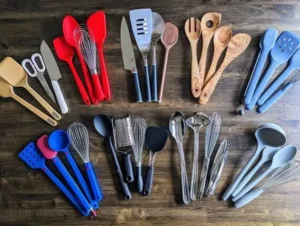
Home cooks often ask what are the best kitchen utensils for handling hot pans without scratching delicate coatings. A heat-resistant silicone spatula tops nearly every culinary expert’s list because it scrapes bowls and pans clean. Quality silicone models withstand temperatures up to 600°F without melting, warping, or absorbing strong garlic odors.
Locking stainless steel tongs act as a safe extension of your hands when flipping sizzling chicken breasts or turning roasting vegetables. Look for twelve-inch tongs with scalloped edges and silicone tips so you can grip food securely without scratching nonstick skillets. A sturdy hardwood spoon offers unmatched strength for stirring thick stews, scraping browned bits off pan bottoms and mixing heavy doughs.
Adding a thin, slotted fish spatula makes flipping fragile eggs, crispy pancakes and flaky seafood completely effortless. The flexible beveled edge slides smoothly beneath delicate foods while draining away excess cooking oil. Keeping a slotted serving spoon nearby also lets you lift boiled vegetables or poached eggs directly out of simmering water.
Comparing the Best Kitchen Utensil Materials
Understanding what are the best kitchen utensils starts with picking safe materials that handle high heat and frequent washing. Different materials offer unique strengths depending on whether you cook with nonstick pans, cast iron skillets, or stainless steel pots. Culinary testing organizations like America’s Test Kitchen Equipment Reviews consistently recommend mixing silicone, wood and steel tools in your kitchen.
Food-grade silicone provides superior flexibility and protects delicate nonstick surfaces from ugly scratches and peeling. Natural hardwoods like maple, olivewood and beechwood stay cool in your hand and bring classic warmth to your stovetop. 18/10 stainless steel delivers unmatched durability for heavy lifting, high-heat searing and effortless dishwasher cleanup.
| Utensil Material | Heat Resistance & Nonstick Safety | Dishwasher Safe & Best Kitchen Use |
|---|---|---|
| Food-Grade Silicone | Up to 600°F — Completely safe for nonstick pans | Yes — Scraping bowls, sautéing, folding batter |
| Natural Hardwood | Up to 400°F — Gentle on nonstick coatings | No, hand wash only — Stirring thick sauces, deglazing pans |
| 18/10 Stainless Steel | Over 800°F — Not safe for nonstick pans | Yes — Flipping heavy meats, whisking, ladling |
| Reinforced Nylon | Up to 400°F — Safe for nonstick pans if not melted | Yes — Budget-friendly flipping and serving |
Must-Have Cutting and Food Prep Utensils
Every guide explaining what are the best kitchen utensils highlights sharp cutting tools that slice ingredients cleanly and safely. Dull blades force you to push harder on tough vegetables, which causes dangerous slips on your cutting board. An eight-inch chef’s knife handles ninety percent of your daily chopping, mincing, slicing and dicing tasks with ease.
Pair your main chef’s knife with a serrated bread knife for slicing crusty loaves and ripe tomatoes without crushing them. A small three-inch paring knife gives you total control when peeling apples, trimming strawberries, or deveining fresh shrimp. Investing in three sharp individual knives beats buying a giant wooden block full of blades you never touch.
Beyond knives, a sharp swivel Y-peeler strips tough carrot, potato and squash skins in seconds without straining your wrist. Heavy-duty kitchen shears snip fresh herbs, trim poultry fat and open stubborn food packaging cleanly. Choose shears with blades that come apart easily so you can wash and dry the center joint thoroughly.
Accurate Measuring Utensils for Cooking and Baking
Stovetop cooking allows creative guessing, but baking requires exact ingredient ratios to achieve proper rise and texture. Using mismatched coffee mugs leads to dense cakes, flat cookies and disappointing kitchen failures. Stocking stainless steel measuring cups and spoons guarantees accurate dry ingredient measurements that never crack or fade.
For water, milk and cooking oils, a clear tempered glass liquid measuring cup lets you check levels at eye height. Look for cups featuring bright, angled markings printed clearly on both the inside and outside surfaces. Adding a digital kitchen scale provides exact gram measurements for consistent bread baking and faster cleanup with fewer dirty cups.
Mixing, Whisking and Serving Tools
Incorporating air into pancake batter, whipping fresh cream and emulsifying salad dressings all require a stainless steel balloon whisk. Choose a whisk with thin, flexible wires and a sealed waterproof handle that traps zero dishwater inside. A flat roux whisk also reaches into tight saucepan corners to keep gravies and cheese sauces completely lump-free.
When dinner finishes cooking, a deep stainless steel soup ladle transfers hot broths, chili and stews into bowls without messy drips. A toothed pasta server grabs slippery spaghetti noodles straight from boiling water while letting excess liquid drain back into the pot. Pairing these tools with nesting stainless steel mixing bowls makes prepping and serving large family meals remarkably smooth.
| Essential Utensil | Ideal Design Feature | Primary Kitchen Task & Key Benefit |
| Balloon Whisk | Flexible thin steel wires | Beating eggs, whipping cream — Adds maximum air quickly |
| Soup Ladle | Deep bowl with pouring lip | Serving soups, stews, sauces — Prevents messy counter drips |
| Y-Peeler | Swivel carbon-steel blade | Peeling potatoes, apples, carrots — Reduces hand and wrist fatigue |
| Box Grater | Four-sided stainless steel | Shredding cheese, grating veggies — Handles multiple textures fast |
| Fish Spatula | Thin, slotted, beveled steel | Flipping fish, eggs, pancakes — Slides cleanly under fragile food |
Specialty Handheld Utensils Worth Owning
You might wonder what are the best kitchen utensils for draining pasta, zesting lemons and grating blocks of cheddar cheese. A four-sided stainless steel box grater shreds fresh cheese quickly without the chemical anti-caking powders found in pre-shredded bags. Adding a microplane rasp grater unlocks bright citrus zest, fluffy Parmesan snow and finely grated fresh ginger or nutmeg.
An instant-read digital meat thermometer removes all guesswork when roasting chicken breasts, grilling thick steaks, or baking bread. Checking internal food temperatures prevents dry, overcooked dinners and protects your family from harmful foodborne illnesses. According to the USDA Safe Minimum Internal Temperature Chart, poultry must reach 165°F for safe consumption.
A smooth-edge manual can opener cuts along the outer rim of metal cans so lids lift away without razor-sharp edges. Adding a sturdy citrus juicer extracts every last drop of fresh lemon or lime juice while catching bitter seeds automatically. These compact handheld helpers solve daily cooking challenges without taking up precious countertop space.
Draining and Straining Tools for Everyday Meals
Draining boiling pasta water safely requires a heavy-duty stainless steel colander with wide loop handles and a stable base. Footed colanders sit securely inside your kitchen sink so hot water drains away without backing up onto your noodles. Avoid cheap plastic colanders that warp under boiling water or stain bright orange after draining tomato sauces.
A fine-mesh stainless steel strainer rinses tiny quinoa grains, sifts lumpy flour and strains smooth homemade stocks effortlessly. Keep both a small three-inch strainer and a large eight-inch sieve handy for different batch sizes. Adding a pump-action salad spinner dries washed lettuce leaves in seconds so homemade dressings cling properly instead of sliding off.
Matching Utensils to Your Cookware Surfaces
Using the wrong utensil on specialized pan coatings ruins expensive cookware in just a single cooking session. Metal spoons and sharp forks scratch delicate nonstick layers, causing food to stick and coatings to flake away. Matching each pan material with the right handheld tool extends the lifespan of your entire kitchen setup.
Nonstick and ceramic pans demand soft silicone, wood, or nylon utensils that glide gently across smooth surfaces. Cast iron skillets and stainless steel pans handle sturdy metal spatulas, tongsand whisks without suffering any surface damage. Protecting your pots and pans starts with keeping compatible utensils right next to your stove.
| Cookware Surface | Recommended Utensils | Utensils to Avoid & Reason |
| Teflon & Ceramic Nonstick | Silicone, wood, nylon | Metal spatulas, forks, whisks — Prevents coating scratches and peeling |
| Tri-Ply Stainless Steel | Stainless steel, silicone, wood | Sharp serrated knives — Resists metal scraping and high heat |
| Seasoned Cast Iron | Flat metal spatula, wood, steel | Harsh abrasive metal scrapers — Smooths seasoning layer safely |
| Enameled Cast Iron | Silicone, hardwood | Metal spoons and steel whisks — Prevents dark gray metal marks |
How to Budget Smartly for Quality Kitchen Tools
Learning what are the best kitchen utensils saves you money by preventing frequent replacements of cheap plastic tools. You do not need to buy luxury designer brands to equip a functional, reliable home cooking station. Local restaurant supply stores sell commercial-grade tongs, whisks, sheet pans and spatulas at surprisingly affordable prices.
Spend extra money on high-touch tools you use every day, such as a sharp chef’s knife and instant-read thermometer. Save money on simple basics like wooden spoons, silicone spatulas and mesh strainers that perform well at budget prices. Building your collection piece by piece ensures every single item in your drawer earns its keep.
Organizing Utensils for a Clutter-Free Counter
Placing your tools right where you use them cuts down on unnecessary steps during busy weeknight dinner rushes. Keep a weighted ceramic utensil crock next to your stove holding your daily wooden spoons, silicone spatulas and tongs. Storing frequently used tools upright keeps them visible and accessible with just one hand while stirring hot pots.
Place expandable bamboo drawer dividers inside your prep drawers to keep peelers, whisks and measuring spoons neatly separated. Dividers stop tall utensils from jamming your kitchen drawers shut during frantic cooking moments. You can also explore our essential kitchen must haves and our guide to organizing small kitchen spaces for more clever storage ideas.
Cleaning and Maintaining Your Kitchen Utensils
Protecting your investment matters just as much as knowing what are the best kitchen utensils to buy first. Always hand wash wooden spoons and sharp kitchen knives with warm soapy water and dry them immediately with a towel. Harsh dishwasher detergents and prolonged hot water cycles warp wooden handles and dull sharp steel knife edges.
Rub a thin coat of food-grade mineral oil onto wooden spoons and cutting boards once a month to prevent cracking. Silicone and stainless steel utensils go straight into the dishwasher for fast, sanitary cleanup after messy meals. Inspect plastic and nylon tools regularly and replace any items showing melted edges or deep knife scratches.
Conclusion
Ultimately, discovering what are the best kitchen utensils turns your busy home kitchen into a joyful cooking space. Start with versatile core essentials like a silicone spatula, locking tongs, wooden spoon, sharp chef’s knife and digital thermometer. Choosing durable, heat-resistant materials ensures your tools perform reliably meal after meal without scratching your favorite pans.
Take inventory of your current kitchen drawers today and donate broken gadgets or duplicate spoons you never touch. Replacing clutter with a few purposeful, well-crafted utensils makes cooking faster, safer and far more enjoyable every single night.
Frequently Asked Questions (FAQs)
What are the top five kitchen utensils every beginner cook needs?
Every beginner cook needs an eight-inch chef’s knife, a heat-resistant silicone spatula, locking stainless steel tongs, a wooden spoon and a stainless steel colander. These five versatile essentials handle chopping, stirring, flipping and draining for almost any everyday recipe.
Are silicone cooking utensils safer than plastic ones?
Yes, 100% food-grade silicone utensils resist heat up to 600°F without melting, warping, or leaching chemicals into hot food. Traditional plastic and nylon tools often melt against hot pan edges and degrade much faster over time.
Why should I avoid putting wooden spoons in the dishwasher?
Dishwashers expose wood to extreme heat, harsh detergents and prolonged moisture that cause handles to swell, split and crack. Hand washing wooden utensils with mild soap and drying them promptly keeps them smooth for decades.
Can I use metal utensils on stainless steel and cast iron pans?
Yes, stainless steel and seasoned cast iron cookware handle metal spatulas, tongs and whisks without any surface damage. However, you must never use metal utensils on nonstick or ceramic pans because they scratch the protective coatings.
How many knives do I really need in my kitchen?
Most home cooks only need three high-quality blades: an eight-inch chef’s knife, a serrated bread knife and a small paring knife. Buying these three individual knives saves counter space and delivers better performance than large pre-packaged knife blocks.
How often should I replace my silicone and plastic kitchen utensils?
Replace plastic or nylon utensils immediately if you notice melted tips, frayed edges, or deep scratches that trap bacteria. High-quality platinum-grade silicone utensils rarely need replacing unless they tear or suffer direct cuts from sharp knife blades.
For a closer look at long-lasting kitchen gear tested by experts, watch Wirecutter Kitchen Tools That Stand the Test of Time to see how durable tools perform in real home kitchens.