Setting up a personal fitness corner inside your house saves valuable commuting time and expensive monthly gym fees. Choosing the right tools turns an empty bedroom corner into a highly effective daily workout studio. Investing in essential home exercise equipment gives you complete control over your personal health and fitness schedule.
Many beginners waste thousands of dollars on giant machines that quickly turn into expensive clothes racks. Focusing on versatile, space-saving gear allows you to train every major muscle group without cluttering your living room. Let us explore the best fitness tools every modern household needs for long-term physical strength.
Building a Strong Foundation with Resistance Tools
Strength training builds lean muscle mass, protects your joints and boosts your resting metabolic rate naturally. You do not need massive commercial weight machines to challenge your muscles and see real physical progress. Stocking essential home exercise equipment starts with selecting versatile resistance tools that grow alongside your fitness level.
Adjustable dumbbells replace an entire rack of traditional free weights while occupying minimal floor space in your closet. Resistance bands provide smooth, constant tension that strengthens stabilizing muscles without putting heavy stress on your spine. Adding a heavy cast-iron kettlebell unlocks explosive full-body movements that build both raw strength and cardiovascular endurance.
| Strength Tool | Primary Muscle Target | Space Needed & Best Workout Style |
|---|---|---|
| Adjustable Dumbbells | Full Body & Arms | Small Corner — Hypertrophy & Strength |
| Resistance Bands | Glutes, Shoulders, Back | Drawer or Bag — Mobility & Toning |
| Cast-Iron Kettlebell | Core, Hips, Posterior Chain | 2×2 Foot Area — Explosive Conditioning |
| Doorway Pull-Up Bar | Upper Back & Biceps | Standard Doorframe — Bodyweight Mastery |
Choosing a Supportive Exercise Mat for Floor Work
Hardwood floors and thin carpets offer zero cushion for your spine during core exercises and stretching routines. A thick, high-density exercise mat protects your knees, elbows and lower back during demanding floor workouts. Every thoughtful collection of essential home exercise equipment includes a durable, non-slip workout mat.
Look for mats made from closed-cell foam or natural rubber that resist absorbing sweat and bad odors. Extra-long mats give tall individuals plenty of room to perform planks, push-ups and yoga flows comfortably. Rolling up your mat after each session keeps your living area tidy and completely free of clutter.
Compact Cardio Gear for Heart Health
Cardiovascular exercise strengthens your heart muscle, improves lung capacity and burns excess calories efficiently at home. You do not need a giant commercial treadmill to get an intense, sweat-drenched aerobic workout indoors. Small cardio tools deliver massive heart-health benefits while fitting neatly under your bed or inside a closet.
A weighted speed jump rope burns more calories per minute than steady jogging while improving your footwork and coordination. Under-desk walking pads allow you to hit ten thousand daily steps while answering emails or watching television. Folding magnetic exercise bikes operate silently, letting you cycle early in the morning without waking sleeping family members.
Mastering Bodyweight Training with Suspension Trainers
Bodyweight exercises build functional strength by teaching your muscles to work together as one coordinated unit. Suspension trainers anchor easily to any sturdy door frame or ceiling beam in just a few seconds. Using your own body weight lets you adjust exercise difficulty simply by changing your foot angle.
Suspension straps challenge your deep core muscles during every single push-up, row and single-leg squat repetition. Physical therapists frequently recommend suspension training because it builds joint stability without heavy spinal compression. Traveling athletes love these lightweight straps because they pack easily into any small carry-on suitcase.
Selecting a Sturdy Adjustable Weight Bench
Adding a flat or adjustable bench multiplies the total number of exercises you can perform with dumbbells. Performing chest presses, seated shoulder presses and incline rows becomes much safer with proper back support. You can also use a sturdy bench for step-ups, hip thrusts and elevated Bulgarian split squats.
Heavy-duty steel frames prevent dangerous wobbling when you lift heavier weights during intense strength training sessions. Look for benches equipped with transport wheels so you can roll them out of the way easily. Thick foam padding covered in tear-resistant vinyl keeps you comfortable and wipes clean in seconds.
| Cardio & Support Gear | Ideal Room Size | Noise Level & Primary Fitness Benefit |
|---|---|---|
| Weighted Jump Rope | High Ceiling Space | Low — High Calorie Burn & Agility |
| Under-Desk Treadmill | Small Office or Den | Whisper Quiet — Daily Step Count & Endurance |
| Folding Exercise Bike | Bedroom Corner | Silent — Low-Impact Joint Cardio |
| Adjustable Weight Bench | Garage or Spare Room | Silent — Safe Upper Body Lifting |
Recovery Tools to Prevent Soreness and Injury
Building muscle actually happens while your body rests and repairs microscopic tissue tears after hard workouts. Neglecting post-workout recovery leads to stiff muscles, painful joints and frustrating training plateaus over time. Smart athletes treat mobility and recovery gear as essential home exercise equipment for long-term consistency.
High-density foam rollers release tight muscle knots and improve blood circulation throughout your legs and upper back. Massage balls target deep tension points in your shoulders, glutes and arches of your feet with pinpoint accuracy. Stretching straps help beginners safely improve hamstring and hip flexibility without straining lower back ligaments.
Designing a Functional Workout Space at Home
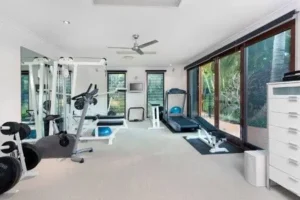
Dedicated workout spaces remove mental friction and motivate you to exercise even after long, tiring workdays. Place your fitness gear in a bright, well-ventilated room where you enjoy spending time every morning. Installing a large wall mirror helps you check your lifting form and prevent avoidable lower back injuries.
Interlocking rubber floor tiles protect delicate hardwood floors from dropped weights while absorbing loud impact noises. Wall-mounted storage racks keep jump ropes, resistance bands and yoga mats organized off the floor. A clean, inviting fitness corner turns daily exercise into an effortless habit rather than a chore.
Budgeting Wisely When Building Your Home Gym
You do not need to buy every piece of fitness gear all at once on day one. Start with basic items like a good mat, resistance bands and one pair of medium dumbbells. Buying essential home exercise equipment gradually lets you discover which workout styles you truly enjoy doing.
Second-hand sporting goods stores and online local marketplaces often sell heavy iron weights at massive discounts. Cast-iron kettlebells and steel dumbbells last forever, making used equipment just as effective as brand-new gear. Spending your budget on durable basics saves money and prevents buyer’s remorse down the road.
Staying Safe During Solo Home Workouts
Working out alone at home requires extra attention to proper exercise form and safe equipment setup. Always inspect resistance bands for tiny cracks or tears before stretching them under heavy muscular tension. Make sure doorway pull-up bars lock securely onto sturdy trim before lifting your feet off the ground.
Warming up for five minutes increases blood flow to cold muscles and lubricates stiff joints before lifting weights. According to the CDC Physical Activity Guidelines for Americans, adults need 150 minutes of moderate aerobic activity and two muscle-strengthening days weekly. Following proven safety habits keeps you injury-free and progressing steadily month after month.
Maintaining Your Fitness Gear for Maximum Lifespan
Sweat contains natural salts and oils that degrade foam padding and rust unprotected steel handles over time. Wiping down your dumbbells, bench and exercise mat after every workout keeps your space fresh and hygienic. Gentle antibacterial sprays clean rubber surfaces without drying out or cracking protective vinyl coverings.
Store resistance bands away from direct sunlight and extreme heat so the elastic latex stays stretchy and strong. Tighten loose bolts on your adjustable bench and folding exercise bike every few months for maximum stability. Taking proper care of your essential home exercise equipment protects your financial investment for many decades.
Overcoming Common Small-Space Storage Challenges
Living in a compact studio apartment should never stop you from achieving your personal health and fitness goals. Modern fitness brands design clever multi-use tools specifically for people living in tight urban spaces. Choosing collapsible and stackable gear keeps your home looking stylish and spacious when workouts finish.
Under-bed storage bins easily hide yoga blocks, jump ropes, sliders and fabric booty bands completely out of sight. Door-mounted organizers hold lightweight accessories vertically without taking up a single square inch of floor space. You can also explore our helpful guide on organizing small apartment spaces for clever closet storage tricks.
Tracking Progress to Stay Motivated Long Term
Seeing measurable improvements in your strength and stamina keeps your motivation high when initial excitement fades. Keep a simple paper notebook or smartphone app next to your mat to record weights and repetitions. Trying to beat last week’s workout numbers turns solo home sessions into a fun personal game.
Consistent progressive overload forces your muscles to adapt by gradually increasing weight, repetitions, or workout duration. Celebrate small milestones like completing your first full push-up or holding a two-minute plank without stopping. Building a home routine around essential home exercise equipment empowers you to stay strong for life.
Frequently Asked Questions
What is the best essential home exercise equipment for complete beginners?
Complete beginners should start with a non-slip exercise mat, a set of loop resistance bands and medium dumbbells. These three affordable tools allow you to perform hundreds of safe, full-body exercises in any small room.
How much space do I need for an effective home workout area?
You only need an open floor space measuring roughly six feet by six feet to work out effectively. This compact area gives you plenty of room to lie down flat, lunge forward and swing kettlebells safely.
Can I build real muscle using only home fitness gear?
Yes, your muscles respond to mechanical tension and progressive resistance rather than expensive commercial gym memberships. Using adjustable dumbbells, kettlebells and bodyweight leverage builds impressive lean muscle mass right inside your living room.
How do I protect my apartment floors from heavy workout gear?
Lay down interlocking high-density EVA foam tiles or a thick rubber utility mat underneath your lifting area. These protective mats absorb heavy impacts, reduce vibration noise for downstairs neighbors and prevent floor scratches.
Are adjustable dumbbells worth the higher upfront cost?
Adjustable dumbbells save massive amounts of space and cost far less than buying fifteen separate pairs of fixed weights. One compact pair replaces an entire dumbbell rack, making them ideal for small bedrooms and apartments.
How often should I clean my home workout mat and weights?
You should wipe down your exercise mat and dumbbell handles with a damp cloth after every sweaty workout session. Deep cleaning your mat once a month with mild soap and water prevents bacteria and odor buildup.