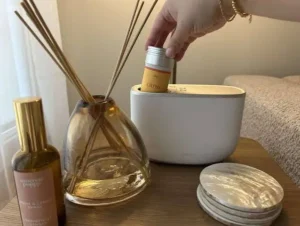
A home essential oil diffuser fills your rooms with a soft, pleasant scent. It also helps you set a mood, whether you want calm or energy. Millions of people now use one every day.
This guide explains how diffusers work, which types exist and how to use them safely. You will also find a comparison table, cleaning tips and a short FAQ.
What Is an Essential Oil Diffuser and How Does It Work?
An essential oil diffuser is a small device that spreads plant oils through the air. Essential oils come from flowers, leaves, bark and fruit peels. Makers press or steam the plants to capture their natural scent.
Most diffusers break the oil into tiny droplets or vapor. The air carries those droplets around the room. Your nose picks up the scent within minutes.
A diffuser does not cure illness. It mainly changes how a room smells and feels. Many people enjoy it as part of a relaxing routine.
Why Use a Diffuser at Your House?
People choose diffusers for many simple reasons. The biggest one is mood. A familiar scent can help you feel relaxed after a long day.
Here are the most common benefits:
- Fresh smell: A diffuser covers cooking and pet odors with a natural scent.
- Better mood: Citrus oils feel bright, while lavender feels calm.
- Bedtime routine: A soft scent signals your brain that the day is ending.
- Focus support: Mint and rosemary scents help many people feel alert.
- Pleasant décor: Modern diffusers also work as small night lights.
Research on aromatherapy shows mixed results. Some studies suggest scents can ease stress, while others find small effects. Treat a diffuser as a comfort tool, not a medicine.
Types of Diffusers You Can Buy
Every home essential oil diffuser works in one of a few ways. Each type has strengths and weaknesses. The table below compares the four main choices.
| Type | How It Works | Best For |
|---|---|---|
| Ultrasonic | Vibrations turn water and oil into mist | Bedrooms, living rooms |
| Nebulizing | Air pressure sprays pure oil as fine mist | Strong scent in large rooms |
| Evaporative | A fan blows air over a pad with oil | Small spaces, desks |
| Heat | A warm plate or candle heats the oil | Budget buyers |
Ultrasonic diffusers are the most popular. They are quiet, affordable and add light moisture to the air. Most beginners should start here.
Nebulizing models use no water. They deliver a strong, pure scent. However, they cost more and burn through oil fast.
How to Choose the Right Diffuser
Picking the right model saves you money and frustration. Start with your room size. A small desk diffuser cannot scent a large living room.
Next, check the tank size. A 100 ml tank suits a small bedroom. A 300 ml tank works better for open spaces.
Think about noise too. Light sleepers should pick a quiet ultrasonic model. Read the product description for decibel levels.
When you shop for a home essential oil diffuser, look for these features:
- Auto shut-off when the water runs out
- Timer settings such as one, three, or six hours
- BPA-free plastic or glass parts
- Dimmable lights that you can turn off at night
Price matters, but safety matters more. A well-made diffuser costs between $20 and $60. Very cheap models often leak or break quickly.
Best Essential Oils for Beginners
Quality oils make a big difference. Look for bottles that list the plant’s Latin name. Avoid products labeled “fragrance oil,” because those are synthetic.
| Oil | Scent Feel | Popular Use |
|---|---|---|
| Lavender | Soft, floral | Evening relaxation |
| Sweet orange | Fresh, sunny | Kitchen and living room |
| Peppermint | Cool, sharp | Morning or study time |
| Eucalyptus | Clean, minty | Bathroom or cold season |
| Lemon | Bright, zesty | Cleaning day freshness |
| Cedarwood | Warm, woody | Quiet reading time |
Blend two or three oils for a custom scent. Lavender and cedarwood make a cozy pair. Lemon and peppermint feel crisp and clean.
Store oils in dark glass bottles. Keep them away from sunlight and heat. Most oils stay fresh for one to three years.
How to Use a Diffuser Step by Step
Using a home essential oil diffuser takes only a few minutes. First, place the unit on a flat, hard surface. Keep it away from walls, books and electronics.
Second, fill the tank with water. Use the fill line shown inside the tank. Never pour water above that mark.
Third, add three to five drops of oil for a small room. Use up to ten drops for a larger space. More oil does not mean better results.
Finally, press the power button and choose a mode. Run the diffuser for 30 to 60 minutes at a time. Take a break before you run it again.
Ventilation matters. Keep a door or window slightly open. Fresh air stops the scent from becoming too strong.
Safety Tips for Families and Pets
Essential oils are strong plant chemicals. They deserve respect. Follow these rules to keep everyone safe.
Keep every bottle out of reach of children. Swallowing even a small amount can cause serious harm. Call poison control right away if this happens.
Pets need extra care. Cats and small animals are especially sensitive to many oils. Tea tree, peppermint and citrus oils can bother them. Ask your vet before you diffuse around pets.
Pregnant women, babies and people with asthma should talk to a doctor first. Some oils can trigger breathing trouble or headaches. Stop using a scent if you feel dizzy, itchy, or short of breath.
Every home essential oil diffuser should sit where kids and pets cannot knock it over. Also, never leave a heat-based unit running while you sleep or leave the house.
How to Clean Your Diffuser
Oil and minerals build up inside the tank over time. This buildup weakens the mist and can harm the device. Clean your diffuser once a week if you use it daily.
Follow this simple routine:
- Unplug the unit and pour out the old water.
- Add a few drops of dish soap and some warm water.
- Wipe the tank with a soft cloth or cotton swab.
- Rinse well and let all parts air dry.
Once a month, deep clean with white vinegar. Fill the tank halfway with water, add a splash of vinegar and run it for five minutes. Then rinse the tank twice.
A clean home essential oil diffuser lasts longer and smells better. It also stays free of mold and germs.
Common Mistakes to Avoid
New users often make the same errors. Knowing them saves you trouble.
First, many people add too many drops. A strong smell can cause headaches. Start small and add more only if needed.
Second, some people use tap water with heavy minerals. Distilled water keeps the tank cleaner. Third, many users run the device all day. Short sessions work better and protect your oils.
Conclusion
A home essential oil diffuser is an easy way to make your space feel fresh and welcoming. Pick a model that fits your room, choose quality oils and keep the device clean. Most of all, follow safety rules if you share your house with kids or pets.
Start with one simple scent and learn what you like. Over time, you can build your own blends and routines. Small habits like this can make your evenings calmer.
Frequently Asked Questions
How many drops of oil should I put in a diffuser?
Use three to five drops for a small room. Add up to ten drops for a large space. Always follow the maker’s guide.
Is it safe to run a diffuser all night?
Most experts suggest short sessions instead. Choose a model with a timer and auto shut-off. Keep the room well ventilated.
Can I use tap water in my diffuser?
Yes, but distilled water works better. It leaves less mineral buildup inside the tank. Your diffuser will last longer.
Are essential oils safe for pets?
Not always. Many oils can harm cats, dogs and birds. Check with your vet before you diffuse.
What is the difference between a diffuser and a humidifier?
A humidifier adds moisture to the air. A diffuser spreads scent. Ultrasonic diffusers add only a little moisture.
How often should I clean my diffuser?
Clean it weekly with soap and water. Do a vinegar rinse once a month. This keeps the mist strong and clean.