A kitchen can become messy when you pour oil, spices, grains, sauces or other ingredients into small containers. A simple funnel can solve this problem by guiding ingredients into jars and bottles with better control.
A funnel kitchen gadget is a small but useful tool that helps transfer liquids and dry ingredients without creating unnecessary spills. It can make everyday kitchen tasks cleaner, faster and easier.
Many people think funnels are only useful for filling bottles. However, they can also help with pantry organization, baking, food storage, meal preparation and home canning.
What Is a Funnel Kitchen Gadget?
A kitchen funnel usually has a wide opening at the top and a narrow tube at the bottom. This simple shape allows food or liquid to move from a larger container into one with a smaller opening.
The main purpose of a funnel kitchen gadget is to control the flow of ingredients during pouring. It can reduce spills and help keep kitchen counters, bottles and storage containers cleaner.
Funnels come in different sizes and materials. Common options include plastic, stainless steel, silicone and funnels designed specifically for canning.
How Does a Kitchen Funnel Work?
A funnel works by collecting an ingredient through its wide upper opening. The ingredient then moves through the narrow spout and enters the target container.
This design becomes especially useful when a bottle or jar has a small opening. Instead of trying to pour directly and missing the opening, you can use the funnel to guide the ingredient accurately.
A funnel can handle both liquids and many dry ingredients. The right size depends on what you want to transfer and the size of the container.
Common Uses of a Kitchen Funnel
A kitchen funnel can help with many simple household tasks. It is particularly useful when you regularly move ingredients between large packages and smaller storage containers.
Filling Bottles and Jars
One of the most common uses is filling bottles with liquids. You can use a funnel when transferring cooking oil, vinegar, homemade sauces, syrups or other suitable liquids.
The funnel directs the liquid into the bottle opening. This can make the process cleaner and reduce the amount of liquid left around the bottle.
Transferring Dry Ingredients
Funnels are not limited to liquids. A wide-mouth funnel can help move rice, lentils, sugar, flour, spices and other dry ingredients into storage jars.
This makes pantry organization easier because you can transfer ingredients from bags into containers with less mess. Wide openings work better for larger or bulkier ingredients.
Refilling Spice Containers
Small funnels can make spice refills much easier. You can transfer spices from larger packets into small jars without spreading powder across the counter.
This can be especially helpful when you keep many spices in matching containers. A funnel also helps you avoid wasting small amounts of expensive spices during transfer.
Filling Homemade Sauces
If you make sauces, dressings, syrups or similar foods at home, a funnel can help you fill bottles more neatly. The tool guides the mixture into the container instead of allowing it to run down the sides.
For thick mixtures, choose a funnel with a wider opening and wider spout. A narrow funnel may slow down the flow or become blocked.
Kitchen Funnel Uses at a Glance
| Kitchen Task | Recommended Funnel Type | Main Benefit |
|---|---|---|
| Filling oil bottles | Narrow-spout funnel | Better pouring control |
| Moving rice or grains | Wide-mouth funnel | Handles larger ingredients |
| Refilling spice jars | Small funnel | Reduces powder spills |
| Filling storage jars | Wide funnel | Makes transfer easier |
| Home canning | Canning funnel | Helps fill jars neatly |
| Filtering liquids | Strainer funnel | Separates small particles |
| Baking mixtures | Wide funnel | Helps control filling9in table format without changing its wording |
Types of Kitchen Funnels
Different kitchen jobs need different funnel designs. Choosing the right type can make the tool much more useful.
Standard Kitchen Funnel
A standard funnel is a basic option for everyday pouring. It usually has a cone-shaped top and a narrow spout.
This type works well for liquids and smaller dry ingredients. It is a practical choice if you want one simple funnel for regular kitchen use.
Wide-Mouth Funnel
A wide-mouth funnel has a larger opening and usually a wider passage. It works better for rice, beans, flour, sugar and other ingredients that may not move easily through a narrow funnel.
A wide funnel can also be useful when filling larger storage containers. It gives you more space to pour without missing the opening.
Canning Funnel
A canning funnel is designed to make filling jars easier. Its wider mouth and broader passage can handle thicker foods and larger pieces better than a standard funnel.
Canning funnels can also help with everyday pantry storage. They are useful for transferring dry foods into jars and other containers.
When preserving food, the funnel is only one part of safe canning. Always follow a tested canning recipe and proper food-preservation instructions.
Strainer Funnel
A strainer funnel combines pouring with filtering. It can help remove small particles while transferring suitable liquids.
This type can be useful for homemade sauces, stocks, infused liquids or other preparations that need filtering. The strainer should be cleaned carefully after use.
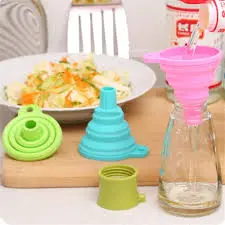
Collapsible Funnel
A collapsible funnel can fold down when you are finished using it. This design can save storage space in smaller kitchens.
Silicone models are commonly available in flexible designs. They can be useful when you want a funnel that fits easily inside a drawer.
Best Materials for Kitchen Funnels
The material affects durability, cleaning, flexibility and how the funnel handles different foods.
| Material | Advantages | Best For |
|---|---|---|
| Plastic | Lightweight and affordable | Everyday dry and liquid ingredients |
| Stainless steel | Strong and durable | Frequent kitchen use |
| Silicone | Flexible and easy to store | Small kitchens and drawers |
| Glass | Easy to inspect | Certain food-transfer tasks |
Stainless steel is a strong choice for durability, while silicone can be useful when storage space is limited.
Plastic funnels can work well for everyday tasks, but you should choose food-safe products intended for kitchen use. Always follow the manufacturer’s instructions for heat and cleaning.
Why Use a Funnel in the Kitchen?
The biggest benefit of a funnel kitchen gadget is better control during pouring. It can help reduce spills, save ingredients and make container refilling easier.
A funnel can also support better pantry organization. When bulk ingredients move into labeled jars, your shelves can look cleaner and become easier to manage.
Another advantage is convenience. Instead of trying to pour carefully into a tiny opening, you can let the funnel guide the ingredient for you.
How to Choose the Right Kitchen Funnel
Choosing a funnel does not have to be complicated. Start by thinking about what you transfer most often and which containers you normally use.
Consider the Spout Size
The spout should fit comfortably into the opening of your bottle or jar. A spout that is too large may not sit properly.
A very narrow spout can also create problems when you transfer thick mixtures or larger dry ingredients. Match the spout size to your main kitchen tasks.
Check the Funnel Width
The top opening determines how easily you can pour ingredients into the funnel. Wide openings work well for bulk foods and thicker mixtures.
For small bottles, a smaller funnel may provide better control. Having two different sizes can be more practical than using one funnel for every task.
Look at Cleaning Requirements
Food particles can remain inside the funnel after use. Choose a design that you can clean properly and easily.
Funnels with smooth surfaces are generally easier to wash. If a funnel has several parts or a built-in strainer, check how easily those parts can be removed and cleaned.
Think About Storage
Kitchen drawers can become crowded quickly. A collapsible funnel can help if you have limited storage space.
Some funnels also have handles or hanging holes. These small design features can make storage more convenient.
How to Use a Kitchen Funnel Correctly
Place the funnel securely over the opening of the bottle, jar or container. Make sure it sits firmly before you begin pouring.
Add the ingredient slowly instead of filling the funnel too quickly. A controlled flow helps prevent overflow and gives the ingredient enough time to move through the spout.
For thick foods, use a funnel with a wider passage. If the ingredient becomes stuck, stop pouring and clear the funnel safely instead of forcing more food through it.
How to Clean a Kitchen Funnel
Cleaning depends on the material and design of the funnel. After each use, remove leftover food before it dries inside the spout.
Wash the funnel with warm water and suitable dish soap. Pay special attention to the narrow tube because food particles can remain hidden inside it.
If the manufacturer says the funnel is dishwasher-safe, you can follow those instructions. Otherwise, hand washing may be the safer option.
Always allow the funnel to dry completely before storing it. Proper cleaning and drying help keep the tool ready for its next use.
Kitchen Funnel vs Pouring Directly
Pouring directly may seem faster, but it can become difficult when the container opening is small. A little movement can cause oil, flour, rice or sauce to miss the opening.
A funnel provides a clear path from the ingredient to the container. This simple tool can therefore make repetitive kitchen tasks more controlled.
| Direct Pouring | Using a Funnel |
|---|---|
| Can create spills | Helps control the flow |
| Difficult with narrow openings | Designed for small openings |
| May waste ingredients | Can reduce unnecessary waste |
| Requires more careful aiming | Guides ingredients into containers |
| Can make counters messy | Helps keep the work area cleaner |
Is a Kitchen Funnel Worth Buying?
For many home kitchens, a funnel is an inexpensive tool that can solve several everyday problems. It becomes even more useful if you regularly transfer ingredients into bottles, jars or storage containers.
A funnel kitchen gadget can also be useful for people who buy ingredients in bulk. Instead of leaving large bags open, you can transfer suitable foods into labeled containers for easier storage.
The best choice depends on your kitchen habits. You do not need a large collection if one standard funnel handles most of your needs.
Tips for Getting Better Results
Use the correct funnel size for the container opening. This simple step can make pouring much easier.
Do not overfill the funnel because ingredients can build up faster than they move through the spout. Pour slowly when working with thick liquids or fine powders.
Keep separate funnels if you regularly work with different types of ingredients. For example, one funnel can be used for general food preparation while another can be reserved for specific tasks.
Clean the funnel soon after use, especially when transferring sticky sauces or thick foods. Dried food can become harder to remove from narrow spaces.
Conclusion
A funnel may look like a very basic kitchen tool, but its simple design makes many tasks easier. From filling spice jars to transferring liquids, it gives you better control and can help reduce kitchen mess.
The right funnel kitchen gadget depends on your ingredients, container sizes, storage space and cleaning preferences. A standard funnel works for many everyday tasks, while wide-mouth, strainer, collapsible and canning designs provide more specialized functions.
If you want a small tool that takes little space but can support many kitchen tasks, a good funnel is worth considering. Choose the right size, use it carefully and clean it properly after every use.
Frequently Asked Questions
What is a kitchen funnel used for?
A kitchen funnel helps transfer liquids and dry ingredients into containers with small openings. It can reduce spills and make filling bottles and jars easier.
Can I use a kitchen funnel for dry ingredients?
Yes, you can use suitable funnels for many dry ingredients. Wide-mouth funnels work particularly well with rice, sugar, flour, lentils and spices.
What is the best material for a kitchen funnel?
The best material depends on your needs. Stainless steel offers durability, plastic provides a lightweight option and silicone offers flexibility and easy storage.
Are kitchen funnels easy to clean?
Most simple kitchen funnels are easy to clean with warm water and dish soap. However, funnels with strainers or narrow passages may require extra attention.
Can I use a funnel for home canning?
Yes, a canning funnel is designed to help fill jars more neatly. For safe home canning, always follow tested preservation instructions and the recommended processing method.
What size kitchen funnel should I buy?
Choose the size according to your containers and ingredients. A small funnel works well for narrow bottles, while a wide-mouth model works better for grains and thicker foods.
Can a kitchen funnel help reduce food waste?
A funnel can help reduce spills during transfer, which may prevent some ingredients from being wasted. It also makes it easier to move ingredients cleanly into storage containers.
Is a collapsible kitchen funnel useful?
A collapsible funnel can be useful when storage space is limited. You can fold it after cleaning and store it in a drawer or small kitchen cabinet.